KAWASAKI Top Engine Cylinder Head END11001-1095
fits model: Kx500. make: Kawasaki. year: 1984.
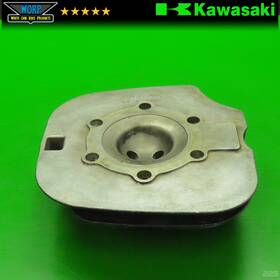
( Manufacturer Part Number: 11001-1095 ), ( Type: Engine 2t Head Bike )
Review KAWASAKI Genuine Oem Engine Cylinder Head Top fits KX500 1984
The Kawasaki 11001-1095 cylinder head top end is a crucial component of the KX500 motorcycle engine manufactured by Kawasaki Heavy Industries Ltd. in 1984. This cylinder head top end is designed specifically for two-stroke, air-cooled, single-cylinder, reed-valve-induced motorcycles.
The cylinder head top end comprises several parts that work together to enable the engine to function efficiently. The piston, which is the movable component within the engine cylinder, interacts directly with the cylinder head top end. The piston travels up and down inside the cylinder, making use of the combustion force generated in the engine to turn the crankshaft and ultimately power the motorcycle.
The cylinder head top end is equipped with a number of critical components. One such component is the cylind head gasket, which is instrumental in sealing the combustion chamber and preventing the escape of engine gases. The gasket also facilitates the transfer of heat away from the engine's combustion chamber to the cooling fins on the cylinder head.
Another significant component of the cylinder head top end is the piston crown. The piston crown plays a vital role in the engine's combustion process. It is responsible for transferring heat from the combustion gases to the cooling fin on the piston, thereby preventing the engine from overheating. Furthermore, the piston crown features a precise crown shape and surface finish, which facilitate efficient combustion and ensure optimal engine performance.
Additionally, the cylinder head top end includes a number of valves. The intake valve, located at the top of the head, allows air-fuel mixture into the engine's combustion chamber during the intake stroke. The exhaust valve, situated at the opposite end of the head, enables the exhaust gases to be expelled from the engine following the combustion process. Both intake and exhaust valves rely on well-designed valve guides, which facilitate their proper seating and movement within the cylinder head.
The cylinder head top end's durability and reliability are vital for the long-term operation of the KX500 engine. Proper installation, maintenance, and repair of this component can lead to a better ride experience and prolong the life of the engine.
In summary, the Kawasaki 11001-1095 cylinder head top end is a complex and essential component for the KX500 engine. Its ability to facilitate the internal combustion process, seal the combustion chamber, and maintain proper engine temperature, all contribute to the optimum functioning of the motorcycle. Regular maintenance and prompt replacement of worn-out components of the cylinder head top end can ensure a more enjoyable and lasting riding experience.
Buying a Kawasaki KX500 1984 engine cylinder head top end (part number: 11001-1095) can be an intriguing decision for motorcycle enthusiasts and mechanics. This component is essential in maintaining the performance and longevity of a KX500's engine. Here are the pros and cons that might help in making a well-informed decision.
**Pros:**1. Improved engine performance: Installing a new cylinder head top end can increase the horsepower and torque of your engine, leading to better overall performance.
2. Enhanced durability: Replacing an old and worn-out cylinder head top end can prevent potential engine damage, ultimately ensuring longer engine life.
3. Smoother engine operation: A new cylinder head top end helps to maintain proper engine compression, resulting in a more consistent power output and smoother engine idle and operation.
4. Peace of mind: Investing in a new top end component gives you peace of mind, knowing that you have ensured the engine is functioning at its best, potentially reducing the likelihood of unexpected engine failure.
5. Potential regain of value: If you are considering selling your KX500 in the future, having replacement parts like the cylinder head top end in good condition can be an attractive selling point for potential buyers.
**Cons:**1. Cost: The price of a new cylinder head top end can be a significant investment. As with most aftermarket parts, prices can vary greatly depending on the source and availability.
2. Installation complexity: Installing a new cylinder head top end can be a challenging process that requires mechanical expertise. This process includes removing the engine's cylinder head and disassembling various components within.
3. Lack of compatibility: It is essential to ensure that you are purchasing the correct part number for your specific motorcycle and engine. Failure to do so could result in compatibility issues that may need additional investments in custom parts or modifications.
4. Disassembly risks: Disassembling engine components can carry some risks. For example, you may accidentally damage one of the engine parts during the process, escalating the cost of repairs.
5. Time commitment: Removing and installing the cylinder head top end is a time-consuming process. It may require a full day or more, depending on the individual's mechanical expertise and available resources.
**Conclusion:**Considering the pros and cons, a new cylinder head top end for a Kawasaki KX500 engine (part number: 11001-1095) can be a valuable investment for enhancing performance, maintaining engine durability, and ultimately, ensuring the long-term excellent condition of your motorcycle. However, the potential costs, time commitments, and installation difficulties may outweigh the benefits for some individuals. Therefore, it is crucial to weigh the decision based on individual circumstances and priorities.
**Recommendation:**If you have the necessary mechanical skills, have the required tools, are comfortable with the time commitment, and willing to invest in a high-quality replacement part, then purchasing the cylinder head top end for your KX500 could lead to substantial performance and longevity improvements. However, if the costs and challenges seem overwhelming, it might be worth considering other maintenance options, such as regular engine checkups, or consulting a professional mechanic for advice.
Details:
part #: 110011095 price
- $184.68
specifications cylindermotorcycleiz:
- for models: Kx500
- for makes: Kawasaki
- for years: 1984
- mpn: 11001-1095
- type: Engine 2t Head Bike
seller cylindermotorcycleiz:
- city: Lake Havasu City, Arizona
- rating: 99.3%
- # reviews: 30154
offer cylindermotorcycleiz:
- sold: 0
- availability: In Stock
- quantity: 1
- options: Ship-to-home
- started: February 4, 2025
payments cylindermotorcycleiz:
- credit card: Visa
- other
- wallet: Paypal
returns cylindermotorcycleiz:
- policy: Returns Accepted
- time: 30 Days
- paid by: Buyer
shipping cylindermotorcycleiz:
- transit: 3-8 Days
- class: Expedited
- type: Fixed
- service: USPS Priority Mail
- cost: $17.00
- carrier: USPS
general cylindermotorcycleiz:
- condition: Used
- Motorcycle Scooter Parts Accessories > Engines Engine Parts > Cylinder Heads
Kawasaki 11001-1095 Is Similar To:
- 104-105 104-105 Kawasaki Zzr 600 Head (26.9% similar) Any questions or concerns please through messaging. Save money be happy. Great condition, no damage to anything, about 12,X miles of use, includes everything seen in pictures head, valve cover, cams intake exhaust, buckets, there is shims although I recommend checking lash before installing buyer ...(February 12th, 2018)
- 00002114 Kawasaki Head Kawaski Kx125 (29.1% similar) ...(February 6th, 2018)
- 03289 Willie Show Stopper Max Master Cylinder Cover Kawasaki (28.4% similar) New never opened chrome Willie max show stopper master cylinder cover kawasaki VN900 all model's VN1500 mean streak VN1600 VN2000 make sure it fits yours 024...(December 11th, 2018)
- 043701 Unbranded Kawasaki Kz1100 Cylinder Head (42.5% similar) This came off a KZ1100. All spark plug holes are good...(February 19th, 2017)
- 0910kx250fhead Kawasaki Oem Core Cylinder Head Kx (44.6% similar) Keep all packaging materials and the original shipping box. Head was recently bead blasted to remove carbon buildup. Oem kawasaki core cylinder head KX250F kx 250F used head nice condition, no visible issues...(July 13th, 2018)
- 0931-0580 Cylinder Works Std Bore For Kawasaki Kx (29.2% similar) 5MM bore cylinder for kawasaki kx 73-0226NOTE: product image is reference only. Cylinder works std 48. Shipping times will vary depending on the country item is being shipped. 50MM, 10:19. Electrical parts are not returnable. The actual item being sold is: cylinder works standard bore cylinder, 49...(October 2nd, 2018)
- 0931-0592 Cylinder Works Standard Bore High Compression Kit Kawasaki (24.2% similar) Cylinder works standard bore high compression kit kawasaki KX250F 2015 -NOTE: product image is for reference only. Electrical parts are not returnable. Shipping times will vary depending on the country item is being shipped...(October 1st, 2018)
- 0931-0596 Cylinder Works Piston Kit For Kawasaki Kx (25.8% similar) Shipping times will vary depending on the country item is being shipped. Electrical parts are not returnable. Cylinder works 96MM piston kit for kawasaki kx 450 f K01NOTE: product image is reference only...(October 2nd, 2018)
- 1064048 Kawasaki Ninja Engine Top End Cylinder Head Cover (49.3% similar) If the item does not fit motorcycle model's specified in listing. More options available upon request. Each part is systematically placed to be easily located once purchased. Many countries only allow 79 max package length and girth combined...(April 7th, 2018)
- 11001-0024 Kawasaki 2004 Kx250 Head (37.9% similar) ...(April 22nd, 2017)
- 11001-0048 Kawasaki Kx Head Cylinder New Oem 725984000081 (42% similar) The picture could be generic. New oem kawasaki head cylinder oem part number: 11001-0048ITEM only fits specific model's listed. Fits: 2006 KX250. New oem kawasaki head cylinder oem part number: 11001-0048ITEM only fits specific model's listed. The picture could be generic...(June 18th, 2018)